Acne Scars vs Dark Spots: How to Tell the Difference and Understand Your Treatment Options
Your acne has finally cleared, but the evidence of those breakouts is still there. Perhaps it is a cluster of brown spots along your cheeks, reddish patches around your chin, or small indentations that become more noticeable under certain lighting.
You may have tried brightening serums, exfoliating acids, or products marketed for acne scars, only to see little improvement. But what if those lingering marks are not actually scars?
Acne scars and post-acne marks are often mistaken for the same condition. However, the dark spots, red marks and uneven skin texture that remain after acne has healed can arise from different processes within the skin. Understanding these differences is important because not all post-acne marks require acne scar treatment.
What Is the Difference Between Acne Scars vs Dark Spots?
The main difference is that post-acne dark spots involve changes in skin colour, while true acne scars involve structural changes to the skin.
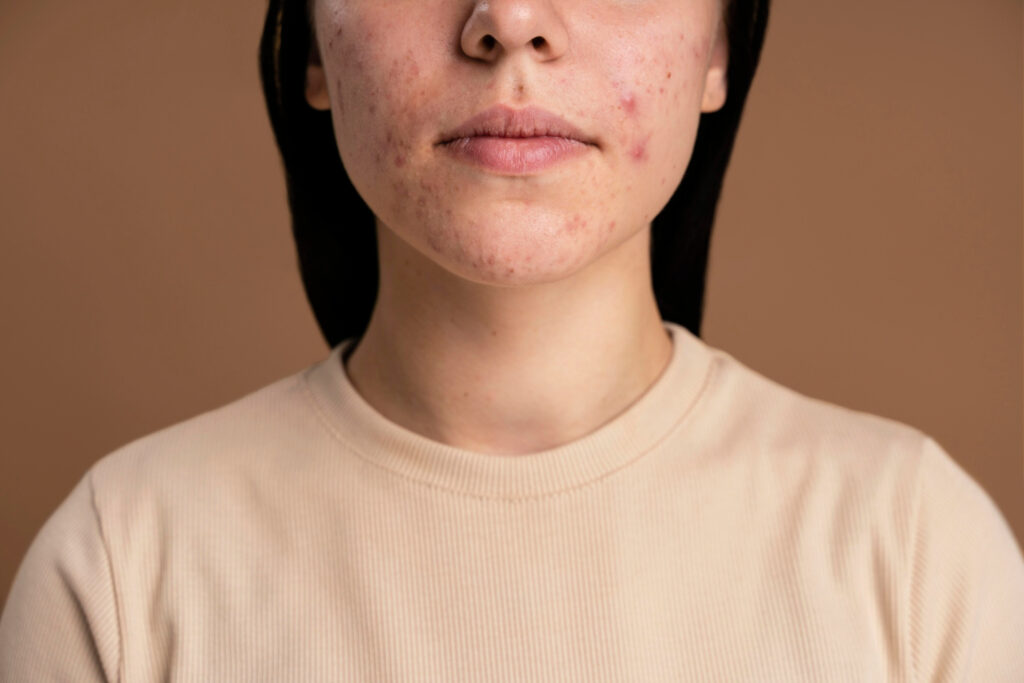
After an inflammatory breakout, the skin can develop pigmentation, persistent redness, or changes in texture as it heals. These are not necessarily the same condition.
There are three common types of post-acne changes:
| Skin concern | What it looks like | What happens beneath the skin |
|---|---|---|
|
Post-inflammatory hyperpigmentation (PIH) |
Post-inflammatory hyperpigmentation (PIH) |
Flat brown, dark brown, or greyish spots |
|
Post-inflammatory erythema (PIE) |
Flat pink, red, or purplish marks |
Persistent redness associated with superficial blood vessels and post-inflammatory vascular changes |
|
True acne scars |
Depressions, pits, uneven texture, or raised areas |
Changes in collagen and skin structure following inflammatory damage |
A simple way to understand the distinction is to look at whether the affected area is primarily a different colour or whether the skin’s surface has physically changed.
However, appearance alone is not always enough for an accurate diagnosis. Pigmentation, redness, and scarring can coexist in the same area.
Why Do Some Pimples Leave Dark Spots Instead of Scars?
Not every breakout damages the skin in the same way.
When acne develops, inflammation triggers the body’s natural healing response. Depending on the severity of the inflammation, the individual’s skin characteristics, and how the lesion heals, the aftermath can vary considerably.
Post-Inflammatory Hyperpigmentation: When Acne Leaves Brown or Dark Spots
Post-inflammatory hyperpigmentation occurs when inflammation stimulates excess melanin production.
Melanin is the pigment responsible for skin colour. When its production increases in response to inflammation, the affected area may remain darker than the surrounding skin even after the original pimple has healed.
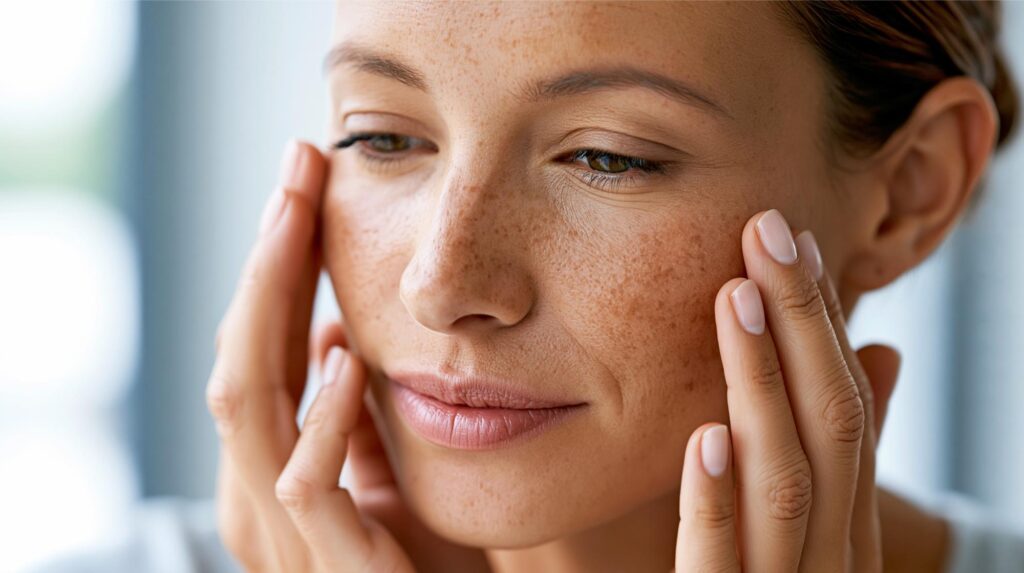
Post-inflammatory hyperpigmentation (PIH) is particularly common in individuals with medium to darker skin tones, including many patients in Singapore. It may appear as brown, dark brown or greyish marks after acne resolves. As Singapore experiences high ultraviolet (UV) exposure throughout the year, consistent sun protection is an important part of managing post-acne pigmentation.
Unlike depressed acne scars, PIH does not necessarily involve permanent structural damage to the skin.
Can post-acne hyperpigmentation fade on its own?
Yes. Many cases gradually improve over several months, although deeper or more persistent pigmentation can take considerably longer.
Daily sun protection, appropriate skincare, and controlling active acne can help support improvement. Some individuals may also benefit from prescription topical treatments or professionally administered procedures.
Post-Inflammatory Erythema: When Acne Leaves Red Marks
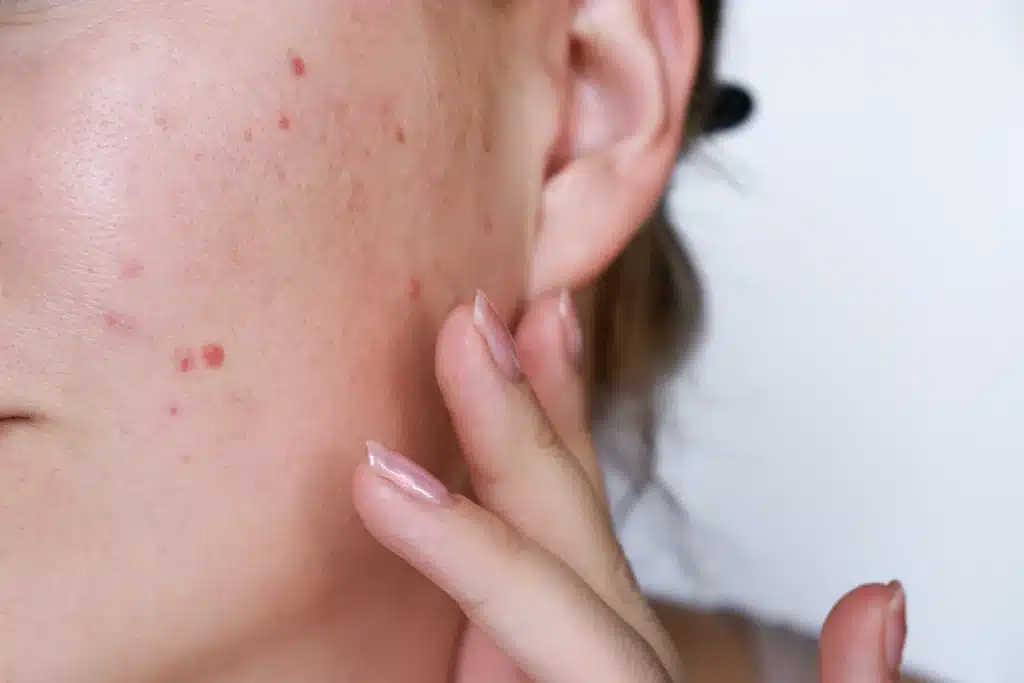
Have you noticed that some pimples leave pink or red patches rather than brown spots?
These marks may be caused by post-inflammatory erythema, commonly referred to as PIE.
PIE is associated with persistent vascular changes following skin inflammation. It can be particularly noticeable in individuals with lighter skin tones, although it may occur across different complexions.
Unlike PIH, which involves excess pigment, PIE is primarily a vascular concern.
This distinction matters because treatments designed to target melanin may not address persistent redness in the same way.
Some red marks gradually fade without procedural treatment. Persistent cases may warrant assessment to determine whether vascular-targeting treatments or other approaches are appropriate.
How Can You Tell If You Have Actual Acne Scars?
True acne scars develop when inflammation damages the deeper layers of the skin and interferes with normal tissue repair.
During healing, the body produces collagen to restore damaged tissue. When insufficient collagen forms, the skin may develop depressions. When excessive collagen accumulates, raised scars may develop.
The most common types of atrophic acne scars include:
Icepick Scars
These appear as small, narrow, deep openings in the skin. Although they may look like enlarged pores, icepick scars extend more deeply into the skin and can be difficult to address with surface-level treatments alone.
Boxcar Scars
Boxcar scars are round or oval depressions with relatively defined edges. Their depth varies, and some become particularly noticeable when light falls across the skin at an angle.
Rolling Scars
Rolling scars create broad, shallow depressions that give the skin a wave-like or uneven appearance. They may develop when fibrous tissue beneath the skin pulls the surface downward.
Hypertrophic and Keloid Scars
Unlike atrophic scars, these are raised areas caused by excessive collagen production during healing. They are more commonly associated with acne on the chest, shoulders, and back.
An important distinction: Dark spots can fade as pigment is gradually cleared, but established indented scars generally do not disappear completely through topical skincare alone.
This is why the distinction between acne marks vs acne scars matters when choosing treatment.
Why Your Dark Spots May Not Need Acne Scar Removal Treatment
If the main concern is discolouration rather than a change in skin texture, procedures intended primarily for collagen remodelling may not be the most appropriate starting point.
For example, a person with flat brown marks may benefit from pigmentation-focused skincare or treatment. Someone with rolling scars, on the other hand, may require an approach that addresses structural changes beneath the skin.
Using an intensive resurfacing procedure for a concern that could respond to less invasive management may expose the skin to unnecessary downtime and potential side effects.
This is particularly relevant for individuals prone to post-inflammatory hyperpigmentation, as certain energy-based procedures can themselves trigger pigmentation changes if not appropriately selected and administered.
A clinical assessment helps determine whether the concern is pigmentation, redness, scarring, active acne, or a combination of these.
Which Treatments May Help With Post-Acne Marks and Acne Scars?
Different treatments address different aspects of post-acne skin changes. At Private Space Aesthetics & Wellness in Singapore, options include Pico Laser, RF Microneedling, and Fractional CO2 Laser.
The appropriate approach depends on the diagnosis, skin type, scar characteristics, treatment history, and individual risk factors.
Pico Laser for Acne Marks, When Is It Considered?
Picosecond laser treatment uses ultrashort pulses of laser energy and may be considered for selected pigmentation concerns, including certain types of post-inflammatory hyperpigmentation. Suitability depends on factors such as skin type, pigmentation characteristics, previous treatments and the risk of adverse effects. Not all post-acne dark spots require laser treatment, and some may improve with appropriate skincare, sun protection and time.
Some picosecond laser systems also have specialised modes or handpieces intended for skin texture and acne scar concerns.
However, not all Pico Laser devices or treatment settings serve the same purpose. Their suitability depends on the type and depth of pigmentation, skin characteristics, and the specific technology being used.
Pico Laser is also not necessarily the first treatment required for every person with PIH. Some pigmentation concerns may improve with sun protection, topical treatment, and time.
RF Microneedling For When Acne Has Changed the Skin's Texture
Radiofrequency (RF) microneedling delivers controlled RF energy through fine needles into the skin. It is used in selected patients with atrophic acne scars to support collagen remodelling, particularly where skin texture is the primary concern. Treatment response varies according to scar type, depth and individual skin characteristics. Potential adverse effects include redness, swelling, pigmentation changes, burns, infection and scarring.
It may be used for selected boxcar and rolling scars, depending on their depth and characteristics.
However, RF microneedling is not primarily a treatment for flat brown marks. It also carries risks, including pigmentation changes, infection, burns, and unwanted scarring, making appropriate patient selection and treatment technique important.
Fractional CO2 Laser For Selected Structural Acne Scars
Fractional CO2 laser is an ablative resurfacing treatment that creates microscopic treatment zones in the skin. It may be considered for selected atrophic acne scars, including certain boxcar scars, through a process of skin repair and collagen remodelling. As an ablative procedure, it generally involves a period of skin recovery and carries risks such as prolonged redness, post-inflammatory hyperpigmentation, infection and scarring. Suitability should be assessed individually, particularly in patients prone to pigmentation changes.
Because it affects the skin more intensively, fractional CO2 laser typically involves more downtime than less invasive treatments.
Redness, swelling, crusting, and temporary changes in pigmentation may occur. Post-inflammatory hyperpigmentation is an important consideration, particularly in darker skin types.
For this reason, fractional CO2 laser is not automatically the preferred option for every patient with acne-related skin changes.
What If You Have Both Dark Spots and Acne Scars?
It is possible to have more than one type of post-acne concern at the same time.
For instance, someone may have rolling scars across the cheeks, brown pigmentation from recent breakouts, and persistent redness around previously inflamed areas.
In these cases, treating only one concern may not address the overall appearance of the skin.
A doctor may recommend a staged or combination approach, depending on the individual’s skin condition.
This could involve controlling active acne first, addressing pigmentation with appropriate skincare or procedures, and subsequently considering collagen-remodelling treatments for established scars.
The sequence matters because active inflammation and skin sensitivity can influence both treatment response and the risk of complications.
Combination treatment does not necessarily mean undergoing multiple procedures at once. It means selecting and timing interventions according to the concerns identified during assessment.
Can Skincare Products Remove Acne Scars?
Skincare can play an important role in managing post-acne marks, but its ability to improve established structural scars is limited.
Ingredients such as retinoids, azelaic acid, and certain pigment-targeting formulations may help manage acne and post-inflammatory hyperpigmentation when appropriately used.
Daily broad-spectrum sunscreen is also important, particularly for individuals dealing with persistent dark marks.
However, topical products generally cannot release fibrous attachments beneath rolling scars or fully restore lost tissue in deeper atrophic scars.
If the skin has developed visible depressions, professional assessment can help determine whether procedural treatment may offer meaningful improvement.
It is also worth remembering that not every visible mark requires treatment. Some changes improve naturally, while others may be managed conservatively depending on the individual’s preferences and skin condition.
When Should You See a Doctor About Post-Acne Marks?
You may wish to seek professional advice if:
- Dark marks remain persistent despite consistent sun protection and appropriate skincare.
- You notice pits, depressions, or uneven texture after acne has healed.
- New breakouts continue to leave marks or scars.
- You are unsure whether your concern is pigmentation, redness, or structural scarring.
- You are considering laser treatment but are concerned about pigmentation changes or downtime.
- Previous treatments have caused irritation or worsened discolouration.
A consultation can also help identify other skin conditions that may resemble post-acne pigmentation.
Frequently Asked Questions
Are dark spots from acne considered permanent scars?
Not usually. Flat dark spots are often caused by post-inflammatory hyperpigmentation rather than permanent changes in skin structure. Many gradually fade, although the process can take months or longer.
Can Pico Laser remove acne dark spots?
Pico Laser may help improve certain post-acne pigmentation concerns, depending on the type and depth of pigment, skin type, and treatment settings. It is not necessary or suitable for every case, and complete clearance cannot be guaranteed.
Do red acne marks eventually disappear?
Some red marks caused by post-inflammatory erythema fade gradually as inflammation and vascular changes settle. Persistent redness may require further assessment.
Can acne scars and hyperpigmentation be treated together?
Yes, but the treatment plan depends on the types of scars and pigmentation present. Some patients may benefit from staged treatments rather than addressing every concern during the same session.
Is RF microneedling better than Pico Laser for acne scars?
Neither is universally better. RF microneedling primarily targets selected textural concerns through collagen remodelling, while Pico Laser may be used for pigmentation and, with certain technologies, selected acne scars. The choice depends on the skin condition and the treatment objectives.
How do I know whether I need acne scar treatment in Singapore?
If your skin has visible indentations, raised scars, or persistent changes in texture, a professional assessment can help establish whether procedural treatment is appropriate. Flat pigmentation or redness may respond to other approaches and may not require scar-remodelling procedures.
Book a Consultation To Understand Your Skin
A dark spot, a red mark, and an indented scar may all begin with the same pimple, but they do not necessarily share the same healing process or treatment requirements.
At Private Space Aesthetics & Wellness, our doctor assesses individual skin concerns before discussing suitable options, which may include Pico Laser, RF Microneedling, Fractional CO2 Laser, or other management approaches.
If you are unsure whether the marks left by acne are pigmentation or true scarring, arrange a consultation to better understand your skin and the available treatment options.
- Private Space Aesthetics & Wellness
- 541 Orchard Road, #19-01 Liat Towers, Singapore 238881
- Tel: +65 6886 1901
- WhatsApp: +65 8392 9209
Disclaimer: This article is intended for general educational purposes and does not replace medical consultation. Treatment suitability, response, risks, and downtime vary between individuals.