| Summary: A sagging jawline (jowls) is usually caused by collagen loss, fat shifting, and reduced structural support over time. Skincare may support skin quality, but it does not lift or reposition deeper tissues that contribute to sagging. A non-invasive, face-lifting treatment like HIFU may be suitable if your skin still has some elasticity and the changes are mild to moderate. |
Often, it starts subtly. Your jawline looks softer in photos. Your lower face feels heavier, even without weight gain. The reflection in the mirror doesn’t quite match how youthful or energised you feel inside.
A sagging jawline rarely happens overnight. It develops gradually as collagen declines, facial fat shifts, and the deeper support structures of the face begin to weaken.
Improving your facial profile doesn’t mean you have to go under the knife. A non-surgical face-lifting treatment could be what you need right now or something to consider before going for something more invasive.
Here’s what to understand before considering treatment.
What Causes a Sagging Jawline?
Many patients assume a sagging jawline is purely a skin issue, but facial ageing is often structural.
The skin is only one part of the picture. Volume loss, ligament laxity, fat descent, and weakening support structures all influence how the lower face changes over time.
This is why treatment should never be based on one concern alone, but on understanding the face as a whole.
Loss of collagen
Collagen is the protein that helps keep your skin firm and supported. From your late twenties onwards, your body produces less of it each year. As collagen levels decline, your skin becomes thinner and less able to hold its shape. Around the jawline, where your skin relies on support beneath it to stay firm and in place, this loss can become more noticeable.
Fat shifting downward
Fat in your face is not fixed in place. Over time, it can move lower due to gravity. What used to sit higher in your cheeks may begin to descend, adding volume along the jawline and changing how your lower face is contoured.
Weakening of support structures
Beneath your skin are layers that help hold everything in position. As these structures gradually weaken with age, they provide less support. This allows skin and fat to settle lower, which contributes to the formation of jowls.
Skin laxity from external factors
Daily habits can also influence how quickly these changes appear. Sun exposure, for example, can break down collagen over time. Smoking, poor sleep, and ongoing stress may also affect how well your skin maintains its structure.
In most cases, a sagging jawline is not caused by one factor alone, but the result of these changes happening together.
Common Signs Your Jawline Is Losing Definition
If you’re not sure whether what you’re seeing is early sagging, the changes are often subtle at first.
Here are some common signs to look out for:
A softer jawline contour
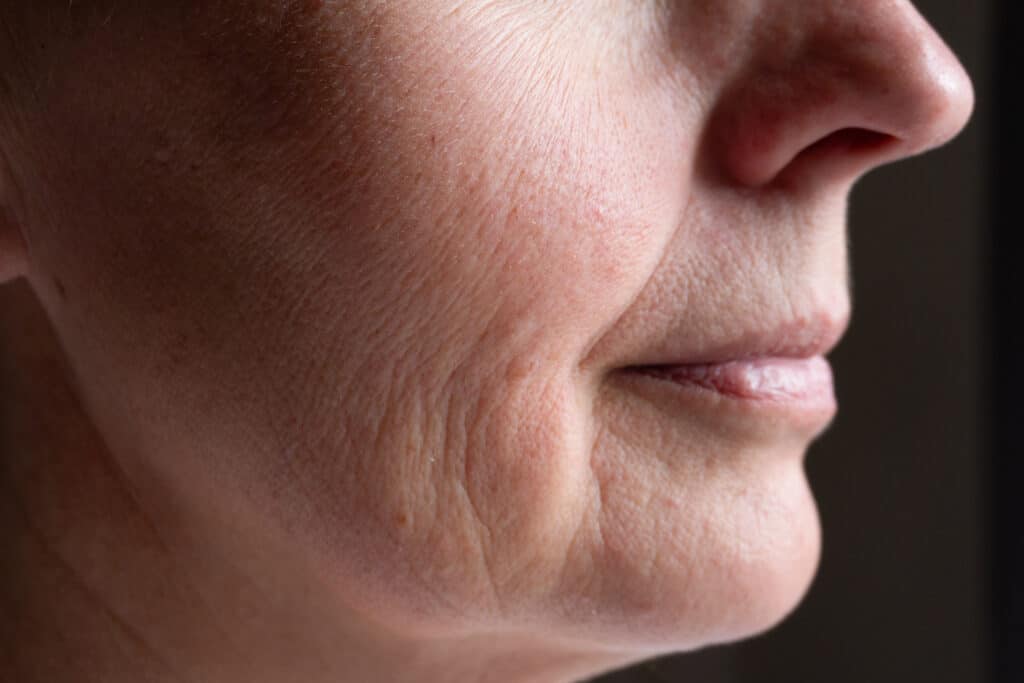
You may notice that the line from your ear to your chin looks less sharp. The jawline can appear more rounded or blurred, rather than clearly defined.
Less separation between your jaw and neck
A well-defined jawline creates a visible angle between your face and neck. As this definition decreases, the two areas may start to blend together.
Early jowl formation
You may begin to see slight sagging along the sides of your jawline. In the early stages, this may only be noticeable in certain lighting or angles.
A heavier-looking lower face
Your lower face may start to look fuller, even without weight gain. This is often due to changes in how volume is distributed, rather than an actual increase in fat.
Changes in your side profile
The transition from your chin to your neck may appear less structured than before, particularly in photos.
Can You Tighten Your Jawline Without Surgery?
In many cases, non-surgical face-lifting treatments may be an option for mild sagging.
At-home products can support your skin quality, which plays a role in how firm your jawline appears. Certain skincare ingredients are more commonly used for this:
- Retinoids (vitamin A derivatives), such as retinol, may support collagen production and improve skin thickness over time.
- Sunscreen helps prevent further collagen breakdown caused by UV exposure.
- Antioxidants, such as vitamin C, help reduce environmental damage and may support collagen formation.
- Hyaluronic acid improves hydration, which can make your skin look more even and plump.
These can improve the overall quality of your skin. However, the effects of specific skincare ingredients are usually limited to the skin itself. They do not reposition fat or restore the deeper support that affects jawline definition.
Understanding what stage your skin is at is often the most important first step.
A professional assessment can help determine whether skincare support is sufficient or whether collagen-stimulating treatments like HIFU may be more appropriate.
What Is HIFU Face Treatment?
When skincare alone is no longer enough, collagen-stimulating treatments such as High-Intensity Focused Ultrasound (HIFU) may offer a more meaningful approach.
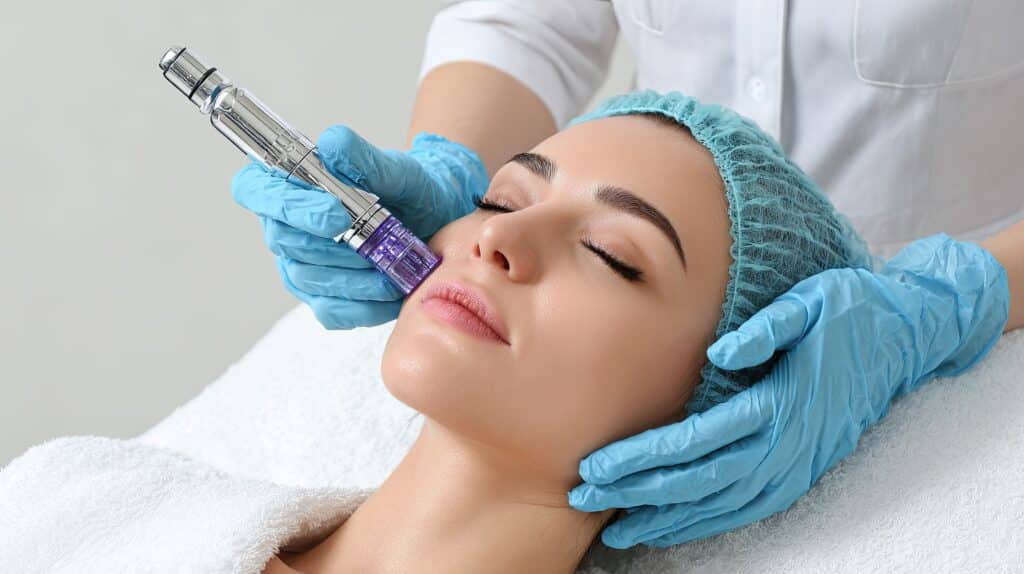
HIFU is a non-surgical face-lifting treatment in Singapore that targets deeper structural layers beneath the skin, where age-related sagging often begins.
During the HIFU treatment, controlled heat is delivered to specific depths. This does not involve cuts or injections. Instead, it triggers your body’s natural healing response, including collagen production.
Over time, this may lead to improved skin firmness and subtle lifting, particularly along the jawline and lower face.
Because this process relies on collagen remodelling, results may develop gradually over several weeks to months.
Effective HIFU treatment is not simply about using a device. It depends heavily on proper patient selection, treatment depth, and anatomical assessment.
The right treatment plan should be tailored to your facial structure, degree of skin laxity, and long-term ageing goals, rather than applying the same settings to every face.
What HIFU Is Designed to Improve
Here’s what a HIFU treatment is designed to address:
- Targets deeper layers of the skin: HIFU reaches areas beneath the skin that are not addressed by topical products.
- Stimulates collagen production: The controlled heat may trigger collagen remodelling, which can improve skin firmness over time.
- Non-invasive with minimal downtime: As the skin surface remains intact, most people can return to daily activities shortly after treatment.
- Gradual, natural-looking changes: Results develop over time, which may suit those who prefer subtle improvements rather than immediate, more noticeable changes.
- Can be used for the jawline and lower face: HIFU is commonly applied to areas where mild sagging is more noticeable, including the jawline and lower cheeks.
Who Is Suitable for HIFU Treatment?
You may be suitable for a HIFU treatment in Singapore if your skin still has some natural elasticity. This is more commonly seen in individuals in their late twenties to forties, when changes are still at an earlier stage. However, age alone is not the deciding factor. Skin quality, genetics, and lifestyle all play a role.
When Should You Consider a Professional Consultation?
If you’ve started to notice changes in your jawline but aren’t sure what’s causing them, or what might help, it may be time to speak with a professional.
This is especially relevant if:
- The changes feel more noticeable or are progressing over time
- You’re unsure whether skincare or treatments like HIFU would be suitable
- You want a clearer understanding of what’s contributing to the change
At Private Space Aesthetics and Wellness, facial rejuvenation begins with understanding – not assumptions.
Our approach focuses on restoring structural harmony, supporting collagen health, and creating a natural-looking definition that still feels like you.
If you’re noticing changes in your jawline and want clarity on what your skin may need, a personalised consultation can help guide the next step.